Plantasktic is a full-stack task management app designed around hierarchical tasks (nesting to any depth) so you can break down big goals into a structure that’s easy to navigate and maintain.
Plantasktic is archived. The hosted site at plantasktic.dev is no longer online. The source is on GitHub: byronwall/plantasktic.
What I took from it
Task management turned out to matter, but as one feature of a larger planning system, not as a product on its own.
Showing the same tasks in different views was the critical part: a table, cards, a scatter plot, and so on. The scatter view later shaped the 2x2 grid in Srcly.
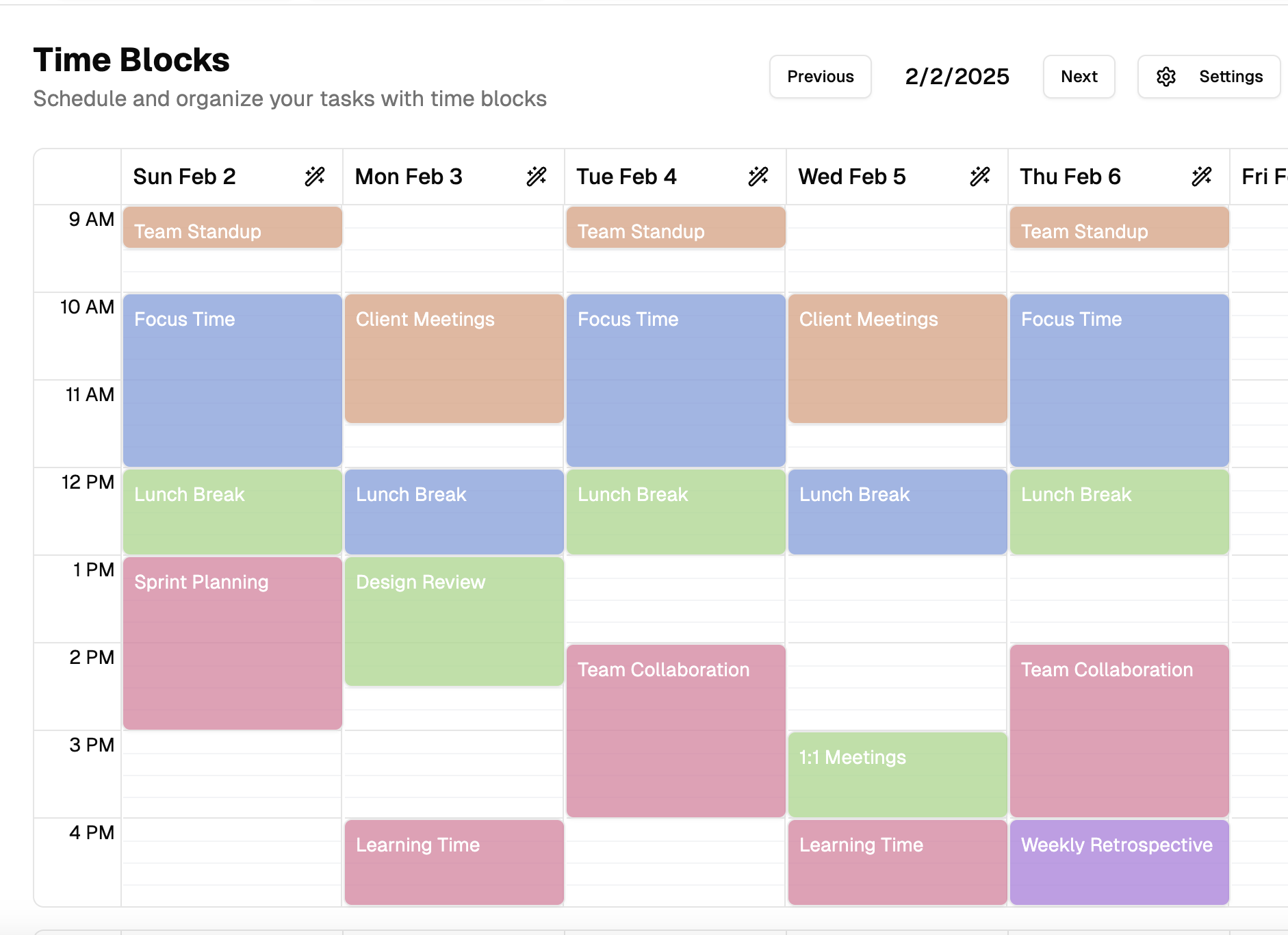
Time blocking was critical when I managed my personal time. It has been much harder to time-block work with agents. Everything runs at the same time, so the blocks stop making sense. That needs a new system.
In the end I moved my tasks and notes into Visual Notes, which is much more agent-first and is in active development. I track agent work in Plan Viewer, which is now my agent hub.
Interface
The UI focuses on a clean, modern workflow: quick task entry, nested task trees, and filtering views for focusing on what matters.
How it works
Plantasktic is built as a modern Next.js app with a type-safe, database-backed API:
- App framework:
- Next.js (App Router) for server-rendered pages and fast navigation.
- Type-safe API:
- tRPC for end-to-end types between client and server.
- Data & auth:
- Prisma for database access and schema management.
- NextAuth.js for authentication.
- UI:
- Tailwind CSS and shadcn/ui for a clean, consistent component system.
Highlights
- Hierarchical tasks with parent/child relationships for structured planning
- Workspaces and projects to keep related work grouped
- Rich task details (status, priority, due dates, descriptions)
- Filtering-focused views for staying on track