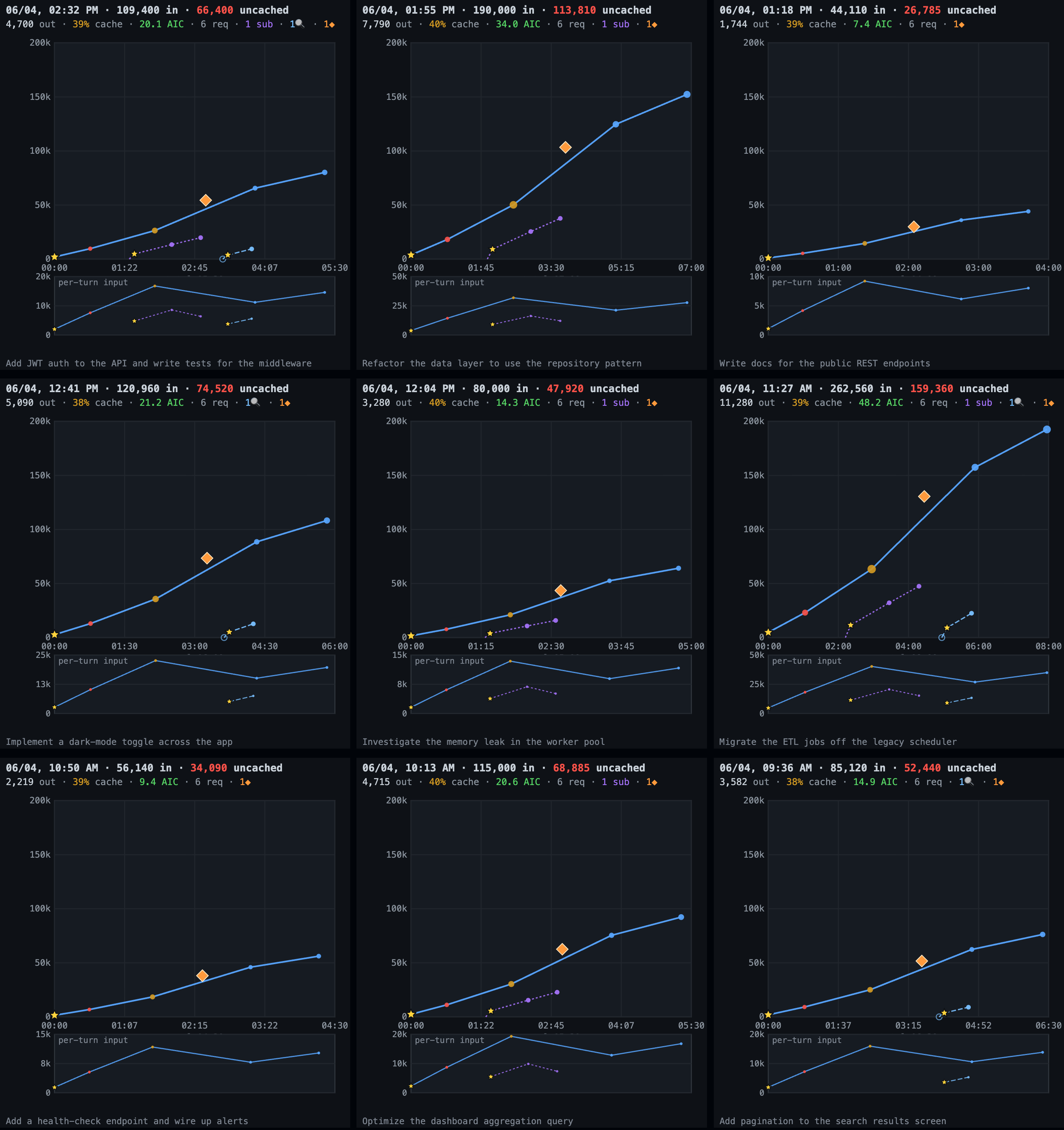
llmly started as a local Flask app: run uv run app.py, open a browser, and inspect Copilot, Codex, and Claude coding-session usage. That is fine for a checkout. It is not enough for the command I actually wanted:
uvx llmlyGetting there required a few packaging moves that are easy to underestimate. A PyPI wheel has to carry the Python code, the Flask templates, the CSS, and the browser JavaScript modules. The console script has to start the server from an installed package, not from a repo folder. The app also needs to open the browser and pick a usable port so the first run feels like a tool, not a development server exercise.
The source is now byronwall/llmly, and the publishing helper lives at publish-llmly.sh.
The package shape
The important change was making llmly/ the installable package boundary:
llmly/
  app.py
  analyzer/
  static/
  templates/
The root-level app.py and analyzer/ remain as compatibility shims for local tests and habits, but the wheel contains the real runtime under llmly/.
The pyproject.toml needs to say three things clearly:
[project]
name = "llmly"

[project.scripts]
llmly = "llmly.app:main"

[tool.hatch.build.targets.wheel]
packages = ["llmly"]
That is the difference between "this repo can run" and "this package can be installed somewhere else and still find its templates and static files."
The publish script
I wanted publishing to be boring. The script loads credentials, refuses to publish the wrong package name, bumps the patch version, runs checks, builds, and uploads.
The environment loading is intentionally simple:
if [ -f ".env" ]; then
  echo "==> Loading environment from .env"
  set -a
  . ./.env
  set +a
fi
The .env file is ignored by git and contains the upload token:
PYPI_TOKEN=pypi-...
TEST_PYPI_TOKEN=pypi-...
That keeps the token out of the command line history and out of the repository. It is still a local secret, so it belongs in .gitignore, not in an example config that might get copied into a commit.
The script also guards against publishing after a bad merge or partial packaging change:
PROJECT_NAME_LINE="$(grep '^name = "' "$PYPROJECT_FILE" || true)"
PROJECT_NAME="$(printf '%s\n' "$PROJECT_NAME_LINE" | sed -E 's/^name = "([^"]+)".*/\1/')"
if [ "$PROJECT_NAME" != "llmly" ]; then
  echo "Error: pyproject.toml project name is '$PROJECT_NAME', expected 'llmly'." >&2
  echo "Refusing to publish so the wrong package name is not uploaded." >&2
  exit 1
fi
That check already paid for itself. After a merge hiccup, the package name had reverted to the old repo name. The script stopped before it could upload the wrong artifact.
Versioning should not be a separate chore
PyPI will not let you overwrite a file for a version that already exists. That is good, but it means every publish needs a version bump. The script makes the patch bump part of the publishing path:
CURRENT_VERSION="$(printf '%s\n' "$CURRENT_VERSION_LINE" | sed -E 's/^version = "([^"]+)".*/\1/')"

MAJOR="$(printf '%s' "$CURRENT_VERSION" | cut -d. -f1)"
MINOR="$(printf '%s' "$CURRENT_VERSION" | cut -d. -f2)"
PATCH="$(printf '%s' "$CURRENT_VERSION" | cut -d. -f3)"
PATCH=$((PATCH + 1))
NEW_VERSION="${MAJOR}.${MINOR}.${PATCH}"
Then it writes that version back to pyproject.toml and llmly/__init__.py. This is not a full release-management system. It is enough structure for a small tool where the common path is "ship the next patch."
Checks before upload
The other useful part is that publishing cannot skip validation by accident:
uv run python -m py_compile app.py analyzer/__init__.py llmly/app.py llmly/__init__.py llmly/__main__.py llmly/analyzer/*.py tests/test_analyzer.py
uv run python -m pytest

for js_file in llmly/static/js/*.mjs; do
  node --check "$js_file"
done
After that, the script clears old distribution artifacts and rebuilds:
mkdir -p dist
rm -f dist/*
uv build
Clearing old files matters because uv publish defaults to dist/*. If stale wheels are still there, they can become part of the upload attempt.
Uploading with the token
The final publish step stays small:
if [ -n "$PUBLISH_URL" ]; then
  uv publish --publish-url "$PUBLISH_URL" --check-url "$CHECK_URL" --token "$TOKEN"
else
  uv publish --check-url "$CHECK_URL" --token "$TOKEN"
fi
The token comes from PYPI_TOKEN or TEST_PYPI_TOKEN, depending on whether the script is publishing to production PyPI or TestPyPI. Website login is separate from package upload credentials; for local publishing, an API token is the right primitive.
Why this is worth scripting
The script is not long, but it removes a surprising number of sharp edges:
- publishing the old package name after a merge
- forgetting to bump the version
- uploading stale files from
dist/ - skipping tests because the publish command is separate
- pasting tokens into a terminal command
- mixing TestPyPI and production URLs
That is the useful threshold for project automation. It does not need to be clever. It needs to make the correct path shorter than the risky one.
For llmly, the result is the workflow I wanted:
./publish-llmly.sh
uvx llmly
One command publishes the next patch. One command runs the installed app.